Introduction & Background
The roads of tomorrow are being reshaped today by a silent revolution unfolding in garages and tech labs around the world. Self-driving cars are no longer a distant fantasy confined to science fiction movies but a tangible reality that is transforming the way we think about mobility, safety, and urban living. With major automakers and tech giants pouring billions into research and development, autonomous vehicles are steadily moving from experimental prototypes to public roads. This shift is not just about innovation for innovation’s sake; it promises to address some of the most pressing challenges of our time, including traffic congestion, road accidents, and environmental concerns. As these vehicles evolve, they are redefining what it means to travel, commute, and even own a car in an increasingly connected world.
Concept & Overview
At its core, a self-driving car, also known as an autonomous vehicle, is a vehicle capable of sensing its environment and operating without human intervention. This capability is made possible through a combination of advanced technologies including sensors, cameras, radar, LiDAR (Light Detection and Ranging), GPS, and powerful onboard computers. These systems work together to collect and process real-time data, enabling the vehicle to make decisions such as accelerating, braking, steering, and navigating complex traffic situations. The concept is rooted in decades of research in robotics, artificial intelligence, and machine learning, where the goal has always been to create machines that can mimic human driving skills while eliminating human error, which remains the leading cause of road accidents.
Autonomous driving technology is typically categorized into six levels, as defined by the Society of Automotive Engineers (SAE). Level 0 represents no automation, while Level 5 denotes full automation under all conditions. Most current developments are concentrated between Levels 2 and 4, where drivers may still be required to remain attentive or take over in certain scenarios. The journey toward fully autonomous vehicles is incremental, with each level building on the capabilities of the previous one. This layered approach not only allows for safer integration into existing transportation systems but also ensures that regulatory frameworks and public acceptance evolve alongside the technology.
Key Features & Highlights
- Advanced Sensor Suite: Self-driving cars rely on a network of sensors to gather data about their surroundings. These include ultrasonic sensors for close-range detection, cameras for visual recognition, radar for speed and distance measurement, and LiDAR for creating high-resolution 3D maps of the environment. Together, these sensors provide a comprehensive view of the road, enabling the vehicle to identify pedestrians, cyclists, other vehicles, and road signs with remarkable accuracy.
- Artificial Intelligence & Machine Learning: The brain of a self-driving car is its AI system, which processes sensor data to make real-time decisions. Machine learning algorithms are trained on vast datasets of real-world driving scenarios, allowing the vehicle to learn from experience and improve its performance over time. This continuous learning helps the car adapt to different weather conditions, traffic patterns, and unexpected obstacles, making it more reliable and safer with each mile driven.
- High-Definition Mapping: Autonomous vehicles use highly detailed digital maps that contain precise information about roads, lanes, traffic signals, and even temporary road conditions like construction zones. These maps are often updated in real time through cloud-based systems, ensuring that the vehicle has the most current information to navigate safely. HD maps also help in predicting the behavior of other road users, such as when a pedestrian might cross the street or when a vehicle is likely to change lanes.
- Connectivity & V2X Communication: Many self-driving cars are equipped with Vehicle-to-Everything (V2X) communication technology, which allows them to exchange information with other vehicles, traffic signals, and infrastructure. This connectivity enables cooperative driving, where cars can warn each other about hazards, traffic jams, or accidents ahead. By communicating with traffic lights, autonomous vehicles can optimize their speed to avoid unnecessary stops, reducing fuel consumption and emissions.
- Fail-Safe Mechanisms & Redundancy: Safety is the top priority in autonomous vehicle design. To mitigate the risk of system failures, self-driving cars incorporate multiple layers of redundancy. This means that critical components like sensors, processors, and power supplies have backup systems in place. If one sensor fails, another can take over. Similarly, if the primary AI system encounters an unknown scenario, a secondary system with stricter protocols can intervene to bring the vehicle to a safe stop.
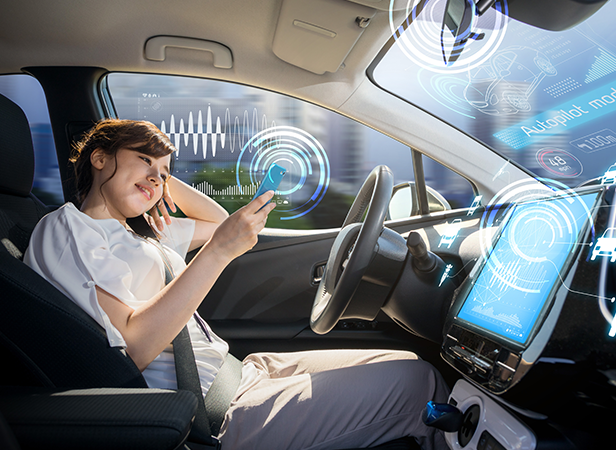
- User Experience & Interior Design: Beyond the technology under the hood, self-driving cars are reimagining the interior space to prioritize passenger comfort and convenience. With no need for a steering wheel or pedals, interiors can be designed more like living rooms or offices, featuring reclining seats, entertainment systems, and even workstations. Some models offer customizable ambient lighting, climate control zones, and voice-activated controls to enhance the passenger experience. This shift reflects a broader trend toward mobility as a service, where the journey itself becomes part of the destination.
Frequently Asked Questions / Pros & Cons
What are the main advantages of self-driving cars?
Self-driving cars offer several compelling benefits. First and foremost, they have the potential to drastically reduce the number of road accidents caused by human error, which accounts for over 90 percent of crashes. By eliminating driver fatigue, distraction, and impaired judgment, autonomous vehicles can make roads safer for everyone. Additionally, they can improve traffic flow by communicating with each other to reduce congestion and optimize routes. From an environmental perspective, self-driving cars can be programmed to drive more efficiently, minimizing fuel consumption and lowering emissions. They also provide greater mobility for elderly individuals and people with disabilities, enabling them to travel independently without relying on others. Finally, the shift toward shared autonomous fleets could reduce the number of cars on the road, leading to less urban sprawl and more efficient use of parking spaces.
What are the biggest challenges facing self-driving car adoption?
Despite the promise of autonomous vehicles, several significant challenges remain before widespread adoption can occur. One of the most pressing issues is regulatory uncertainty. Governments around the world are still developing frameworks to govern the testing, certification, and deployment of self-driving cars. Legal liability is another major hurdle. In the event of an accident involving an autonomous vehicle, determining responsibility can be complex, especially when software and hardware from multiple manufacturers are involved. Ethical dilemmas also pose challenges, such as how the AI should prioritize decisions in unavoidable accident scenarios. Public trust and acceptance are critical factors, as many people remain skeptical about relinquishing control to a machine. Technical challenges, such as navigating unpredictable environments like school zones or construction sites, also require ongoing refinement. Finally, the high cost of developing and deploying this technology remains a barrier for many companies and consumers alike.
Are self-driving cars safer than human-driven cars?
While self-driving cars have the potential to be safer than human-driven cars, the answer is not yet definitive due to the limited real-world data available. Early studies and pilot programs suggest that autonomous vehicles can reduce the number of accidents caused by human error, such as distracted driving or speeding. However, the technology is still evolving, and there have been notable incidents involving self-driving cars, including fatal accidents in testing scenarios. Safety depends heavily on the robustness of the AI, the quality of the sensor suite, and the ability of the vehicle to handle edge cases. As the technology matures and more data is collected, the safety benefits are expected to become more apparent. Until then, a cautious approach with rigorous testing and continuous improvement will be essential to ensure public safety.
What are the environmental impacts of self-driving cars?
The environmental impact of self-driving cars is a mixed picture. On the positive side, autonomous vehicles can contribute to reduced emissions through more efficient driving patterns, such as smoother acceleration and braking, optimized route planning, and reduced traffic congestion. Electric autonomous vehicles, in particular, have the potential to significantly lower greenhouse gas emissions compared to traditional internal combustion engine vehicles. However, there are potential downsides. If autonomous vehicles lead to increased car ownership or longer commutes due to more convenient travel, the overall environmental benefits could be diminished. Additionally, the production of advanced sensors, high-performance computing hardware, and LiDAR systems requires significant energy and resources, which could offset some of the environmental gains. Overall, the net environmental impact will depend on how the technology is implemented and integrated into broader transportation and urban planning strategies.
How do self-driving cars handle unpredictable situations like bad weather?
Handling unpredictable situations, especially in adverse weather conditions like heavy rain, snow, or fog, remains one of the most significant technical challenges for self-driving cars. While sensors like LiDAR and radar are designed to perform in various weather conditions, their effectiveness can be reduced by factors such as rain droplets scattering laser beams or snow covering sensors. To address this, automakers and tech companies are investing in sensor fusion, where data from multiple sensors is combined to improve accuracy and reliability. Some vehicles also use thermal cameras or infrared sensors to detect obstacles in low-visibility conditions. Additionally, machine learning models are being trained on datasets that include diverse weather scenarios to improve the car’s ability to make safe decisions in challenging environments. Despite these advancements, unpredictable weather remains a hurdle that requires ongoing innovation and real-world testing.
Practical Guidance & Solutions
For those eager to embrace the future of autonomous driving, here are some actionable steps to prepare and make informed decisions.
Research and Choose the Right Technology: Not all self-driving capabilities are the same. Familiarize yourself with the different levels of autonomy and the features offered by various models. For example, Level 2 vehicles require driver supervision, while Level 3 systems allow limited hands-off driving under specific conditions. Consider your comfort level and how you plan to use the vehicle before making a purchase.
Stay Updated on Regulations: The legal landscape for self-driving cars is evolving rapidly. Keep abreast of local and national regulations regarding autonomous vehicle testing and deployment. Some regions have strict rules about where and how these vehicles can operate, while others are more permissive. Understanding the legal framework in your area will help you navigate insurance, liability, and registration requirements.
Test Drive and Evaluate Safety Features: If possible, experience a self-driving car firsthand through test drives or demo programs. Pay attention to how the vehicle handles real-world scenarios, such as merging onto highways, navigating intersections, or responding to unexpected obstacles. Evaluate the responsiveness of the AI and the clarity of communication between the car and the driver. Safety features like automatic emergency braking, lane-keeping assist, and adaptive cruise control should be thoroughly tested.
Plan for Connectivity and Infrastructure: Self-driving cars rely heavily on real-time data and connectivity. Ensure that your home or workplace has reliable internet access to support software updates and remote diagnostics. Additionally, consider the availability of smart infrastructure in your area, such as connected traffic signals or dedicated lanes for autonomous vehicles. These factors can significantly enhance the performance and safety of your vehicle.
Consider the Transition to Shared Mobility: If you are open to alternative ownership models, explore the growing market for autonomous ride-sharing services. Companies like Waymo, Cruise, and others are piloting on-demand mobility solutions in select cities. Using shared autonomous vehicles can reduce the need for personal car ownership, lower transportation costs, and contribute to more sustainable urban environments. Evaluate the pricing, availability, and convenience of these services in your area.
Prepare for Maintenance and Updates: Autonomous vehicles require regular software updates to improve performance and safety. Stay informed about update schedules and ensure that your vehicle’s software is up to date. Additionally, familiarize yourself with the maintenance requirements for advanced sensors and hardware. While self-driving cars are designed to be reliable, proactive maintenance can extend their lifespan and ensure optimal functionality.
Conclusion
The arrival of self-driving cars marks a transformative moment in the history of transportation, one that promises to reshape not just our roads but our cities, economies, and daily lives. From reducing accidents and easing traffic congestion to redefining the concept of car ownership and urban mobility, autonomous vehicles stand at the intersection of innovation and necessity. Yet, the journey toward full autonomy is still fraught with challenges, from technical hurdles to ethical dilemmas and regulatory complexities. As we stand on the cusp of this electric dream, it is clear that the road ahead will be defined by collaboration among automakers, policymakers, technologists, and the public. The promise is immense, but realizing it will require patience, perseverance, and a shared commitment to building a safer, smarter, and more sustainable future. Whether you are an early adopter, a cautious observer, or simply curious about what lies ahead, one thing is certain: the age of autonomous driving has begun, and it is rewriting the rules of the road as we know them.